Market review. For half a century, the economics of Panama’s free zones boiled down to one word: transit. Goods enter through one port, are stored, and leave through another — with the Colón Free Zone as the great warehouse of the hemisphere. In 2026 that picture is shifting, and the numbers confirm it: the country’s free zones captured more than USD 58.5 million in investment over the first four months of the year, and in the first quarter alone 24 new companies were approved to operate in its special economic zones. The pattern behind those figures is the interesting part — this is not more of the same, it is something else.
The 2026 figures, in context
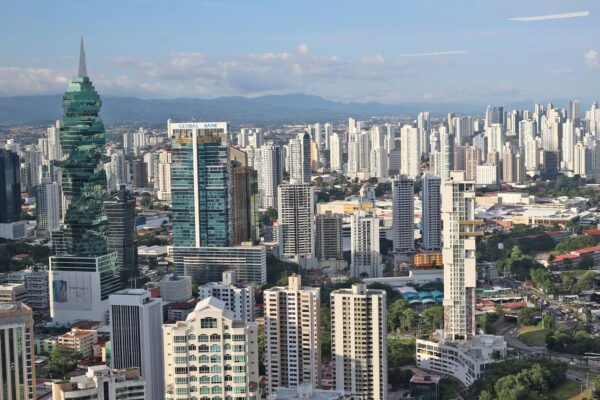
The USD 58.5 million over four months impress not by absolute size — Panama moves far more than that in aggregate — but by their composition. The 24 companies approved in the first quarter do not come from a single market: they come from the United States, Mexico, Costa Rica, Brazil, China, Germany and Panama itself. That diversity of origin is the signal. A free zone that only attracts traders from one corridor is a warehouse; one that attracts manufacturing, technology, pharmaceuticals and industrial services from seven different countries is a platform. Panama is migrating from the former to the latter.
Colón Free Zone: the giant reinventing itself
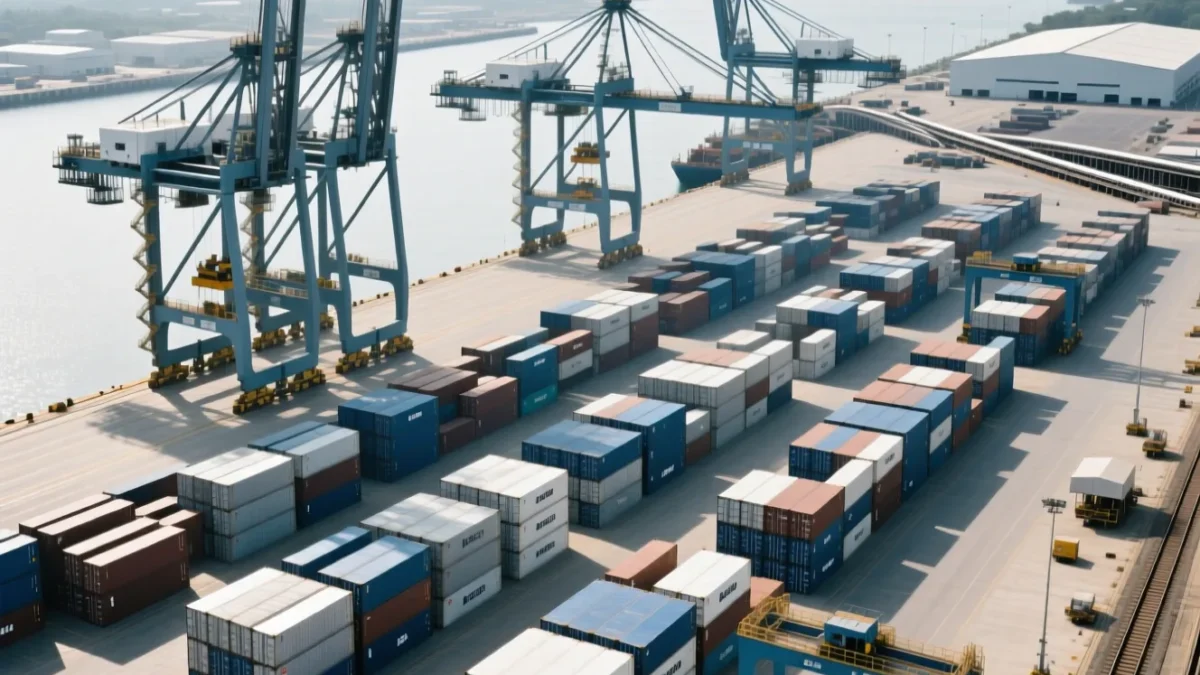
The Colón Free Zone (CFZ), on the Atlantic, remains the largest free zone in the Western Hemisphere, with roughly 2,500 companies operating and global brands among its historic occupants. Its classic strength — redistributing goods across all of Latin America and the Caribbean — is not disappearing; a new layer is being added on top. Nearshoring pressure and the reconfiguration of supply chains are pushing the CFZ from pure re-export toward higher-value services: conditioning, labelling, light assembly, specialised distribution. The warehouse is learning to transform, not just to store.
Panamá Pacífico: the showcase of the new model
If Colón is the giant reinventing itself, Panamá Pacífico — on the Pacific, at the former Howard base — is the showcase of what Panama wants to be. More than 160 companies operate there, including eight Fortune 500 firms, with profiles ranging from light manufacturing to distribution centres, back-office and call centres. It is the ecosystem where the talk of a services-and-manufacturing hub stops being a brochure and becomes payroll: companies that do not come to Panama to move goods across, but to produce, assemble, code and coordinate the region.
Why now: nearshoring, with the Canal as backstop
The underlying engine is the global reorganisation of supply chains. The nearshoring wave — bringing production and distribution closer to the American market after years of logistics fragility — finds in Panama a combination hard to replicate: the Canal and the Hub of the Americas for connectivity, the US dollar as currency with no exchange risk, and a spread of fiscal regimes (free zones, EMMA for manufacturing, SEM for headquarters) designed to lower the cost of setting up. Canal capacity is the obligatory backdrop: when transit tightens, Panama’s value proposition stops being «pass through here» and becomes «stay and add value here.» The logistics moment, paradoxically, reinforces the zones’ argument.
What it means for a company weighing a move
For the investor, the practical reading is twofold. First, the choice of zone is functional, not geographic: Colón for operations built on mass redistribution and Atlantic proximity; Panamá Pacífico for light manufacturing, services and regional-distribution functions. Second, a free zone rarely travels alone: it combines well with the EMMA regime where manufacturing is involved, or with an SEM structure where the operation includes a regional services headquarters. And all of that — worth remembering — sits within the new 2026 economic-substance framework: free zones always required real presence, so whoever genuinely operates is already building the substance Law 526 will demand from 2027.
Key data
- More than USD 58.5 million invested in free zones in the first four months of 2026.
- 24 new companies approved in Q1, from the US, Mexico, Costa Rica, Brazil, China, Germany and Panama.
- Colón Free Zone: around 2,500 companies; the largest free zone in the Western Hemisphere.
- Panamá Pacífico: over 160 companies, including 8 from the Fortune 500.
- Rising sectors: logistics, commerce, technology, pharmaceuticals and industrial services.
Conclusions
The story of Panama’s free zones in 2026 is not one of an investment record — the figures are solid, not spectacular — but of a change in nature. Panama is moving from selling transit to selling value added: light manufacturing, services, regional distribution, with capital arriving from seven different markets. Colón reinvents itself from its scale; Panamá Pacífico shows the finished model. For a company weighing nearshoring, the decision is no longer only whether Panama, but which zone and combined with which regime. And the answer, in 2026, is written with real substance — because the platform Panama wants to be only works with operations that genuinely exist.
This article is for general information only and does not constitute legal, tax or financial advice. Symbol Consulting is not a licensed tax or legal adviser in Panama; for specific decisions, consult a professional licensed in the jurisdiction.